Technical Analysis
VWAP: The Average That Institutions Watch
Volume-Weighted Average Price is the average price at which an asset has traded, weighted by volume. It differs from a simple moving average in one crucial respect: it weights each price by the volume traded at that price, so prices where more trading occurred have more influence on the average. The result is a line that reflects where the market has actually transacted, not just where it has closed.
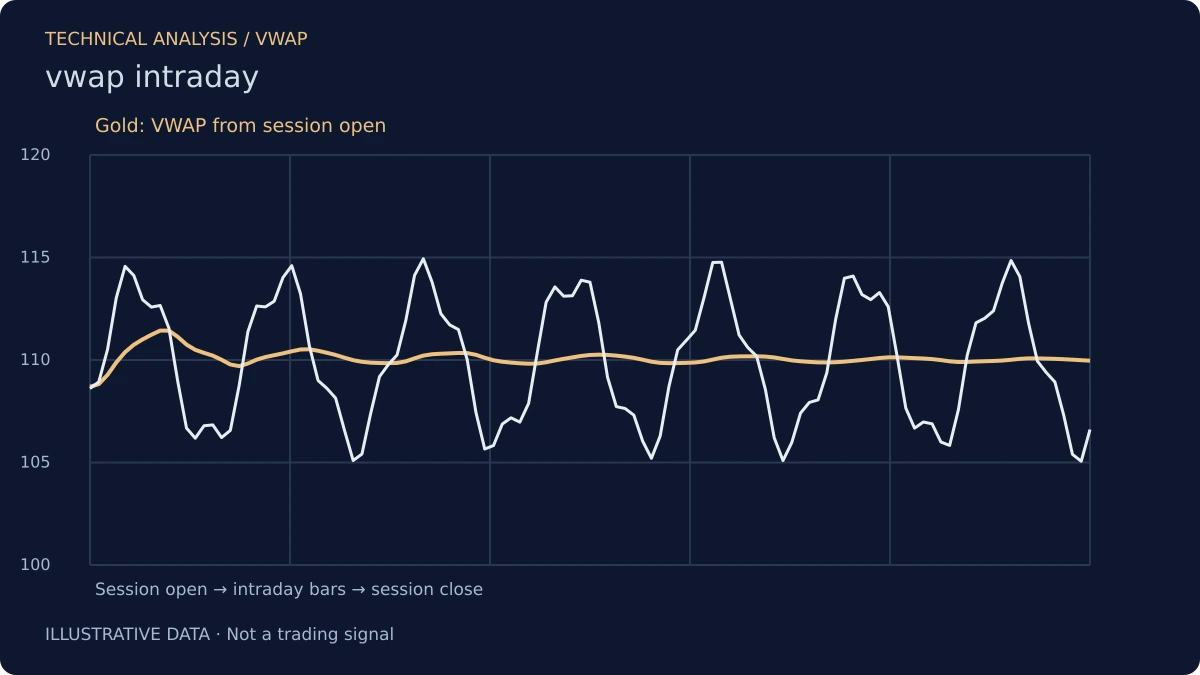
VWAP is typically calculated from the start of the trading session and resets each day. The intraday reset is important: it means VWAP describes the average price of the current session, not a rolling average across multiple sessions. The reset makes VWAP a session-specific benchmark, which is why it is used primarily by intraday traders and execution algorithms.
Why Institutions Watch It
The institutional interest in VWAP comes from execution. A large order cannot be executed at a single price without moving the market; it must be worked over time. The benchmark for whether the execution was good is often VWAP: an order that was filled at an average price below VWAP (for a buy) is considered a good execution, because it beat the market's average.
This benchmark role is the reason VWAP matters even to traders who do not use it as a signal. When a large institutional order is being worked, the execution algorithm may reference VWAP, and the resulting order flow can create patterns around the VWAP line. The line is not magic; it is a focal point for a specific kind of activity.
VWAP as Support and Resistance
Intraday traders often use VWAP as a support or resistance level. When price is above VWAP, the session's average buyer is in profit; when price is below, the average buyer is underwater. The line can act as a magnet, because price tends to revert to the average of where trading has occurred.
The support/resistance reading is stronger when VWAP coincides with other levels, such as a previous day's high or a round number. The confluence is the signal; VWAP alone is a reference.
Anchored VWAP
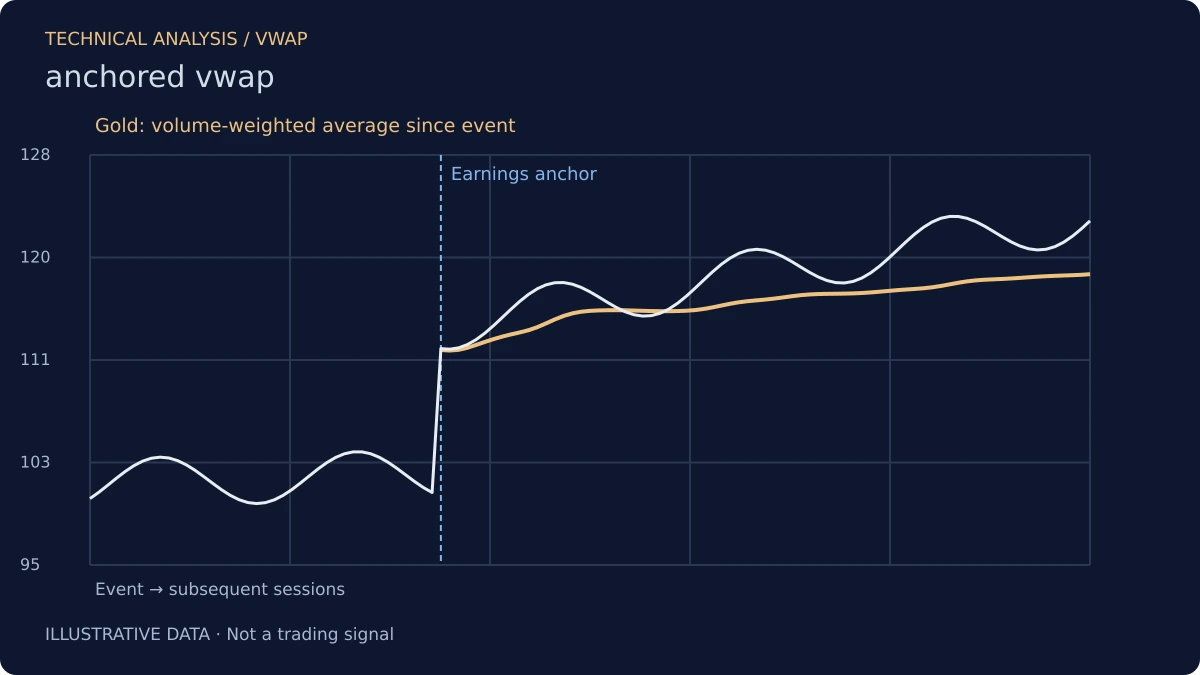
The anchored VWAP variant allows the calculation to start from a specific event rather than the session open. Common anchors are earnings announcements, significant highs or lows, and news events. The anchored version describes the average price since the anchor, which can be more informative than the session VWAP for swing traders.
The choice of anchor is a judgment call, and different anchors produce different lines. The anchor should be chosen before looking at the chart, to avoid the temptation to select the anchor that makes the line fit the price action.
The Intraday Reset and the Overnight Gap
The daily reset means VWAP does not carry information across sessions. An overnight gap is not reflected in the next day's VWAP until trading occurs at the new price. This is a feature, not a bug: the reset makes VWAP a clean measure of the current session's activity, uncontaminated by prior sessions.
The limitation is that VWAP is not useful for multi-day analysis. For that, a rolling VWAP or an anchored VWAP is more appropriate.
What VWAP Does Not Do
It does not predict price. It does not identify trends. It measures the volume-weighted average price of a session, and it makes that average visible. Used as an execution benchmark and as an intraday reference, it is one of the most practically useful tools available. Used as a standalone signal, it is a reference line, not a strategy.
Risk Disclosure: The above content is a discussion of technical analysis methods only and does not constitute any investment advice. VWAP carries lag and the possibility of misjudgment; no single indicator should be the sole basis for trading decisions. Markets carry risk; decisions must be independent.