Candlestick Patterns
Spinning Top: A Small Body With Two Wicks
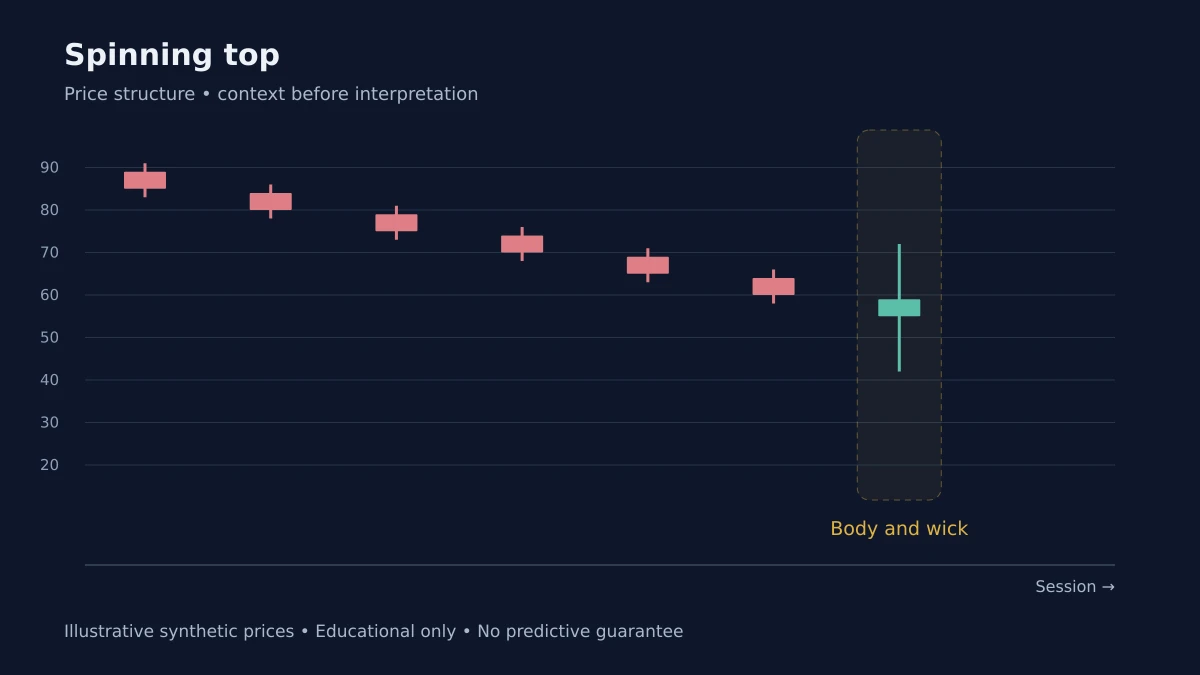
A spinning top is a candlestick with a small body and wicks of roughly equal length on both sides. The shape is a small body centered within a wider range, and it describes a session where price moved in both directions but ended near where it started. The pattern is a description of indecision, similar in spirit to the doji but with a slightly larger body.
The spinning top is often overlooked because it lacks the dramatic shape of the hammer or the engulfing. But it is a useful warning, particularly when it appears after an extended trend.
The Shape and the Meaning
The small body indicates that the open and close were close together. The wicks on both sides indicate that price moved in both directions during the session. The combination describes a session where neither buyers nor sellers were able to maintain control.
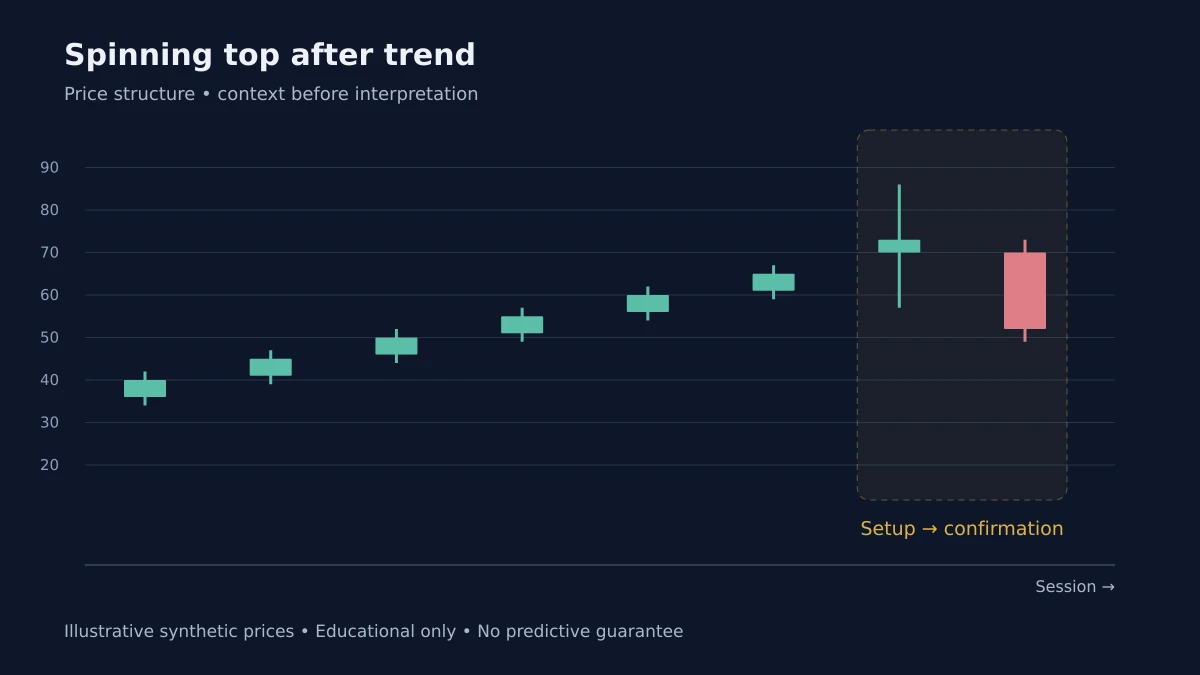
The spinning top is more meaningful when it appears after an extended trend, because the indecision is more significant in that context. In a range, the pattern is less informative, because the market is already indecisive.
The Spinning Top as a Warning
In classical candlestick theory, the spinning top is a warning that the trend may be losing momentum. The warning is not a signal; it is a prompt to pay attention to the next candle. A strong close in the direction of the prior trend suggests the spinning top was a pause; a strong close against the trend suggests it was a reversal.
The Confirmation
The confirmation comes from the following candle, as with most candlestick patterns. The spinning top is the setup; the next candle is the signal.
What the Spinning Top Does Not Do
It does not predict the direction of the next move. It describes a session of indecision, and it makes the indecision visible. Used as a warning, it is useful. Used as a standalone signal, it will produce more false positives than true ones.
Risk Disclosure: The above content is a discussion of technical analysis methods only and does not constitute any investment advice. Candlestick patterns carry no predictive guarantee; no single pattern should be the sole basis for trading decisions. Markets carry risk; decisions must be independent.